Vegetable cooking times: quick cheat sheet for 4 methods
Clear, practical times for boiling, steaming, oven-roasting and pan-frying common vegetables. Includes a quick table, timing rule and doneness checks.
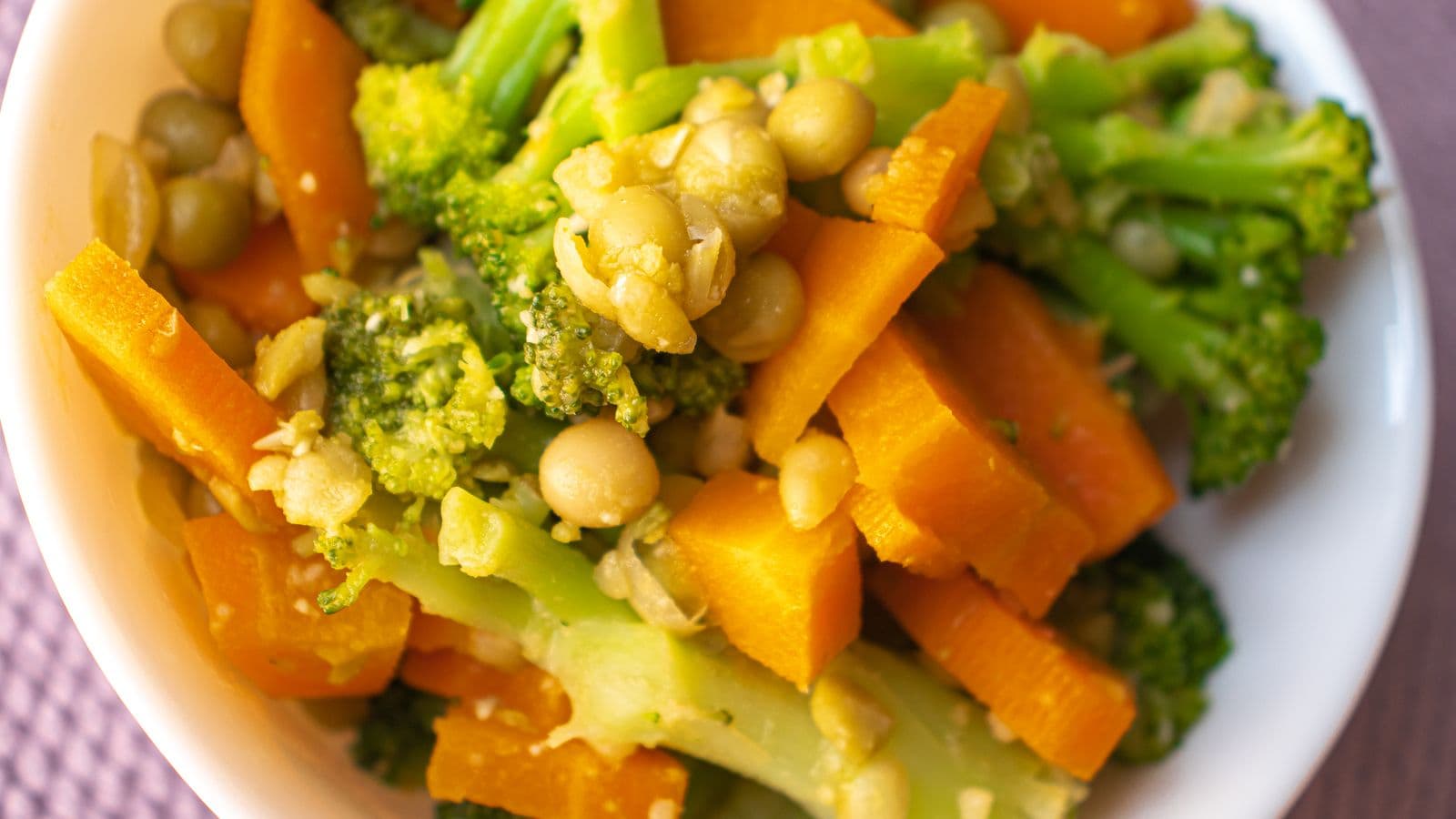
You have the pan in front of you and you imagine crisp broccoli, not a green mush. You’ve seen different timings online and want a single clear number for each method, without weighing or consulting three different pages.
Quick table: average times for 1–2 servings (regular pieces)
Here’s the quick answer: for each vegetable you’ll find four ranges, one per method — boil, steam, roast in the oven, pan-fry. The figures apply to regularly cut pieces (1–2 cm or whole where indicated).
| Vegetable | Boil | Steam | Oven (200°C) | Pan (hot oil) |
|---|---|---|---|---|
| Broccoli (florets) | 3–5 min | 4–6 min | 18–22 min | 6–8 min |
| Cauliflower (pieces) | 6–8 min | 8–10 min | 25–30 min | 8–10 min |
| Courgettes (slices 1 cm) | 2–4 min | 3–5 min | 15–20 min | 4–6 min |
| Carrots (slices 5 mm) | 4–6 min | 6–8 min | 25–30 min | 6–8 min |
| Asparagus (whole) | 3–5 min | 4–6 min | 12–15 min | 6–8 min |
| Potatoes (2 cm cubes) | 10–12 min | 12–15 min | 30–40 min | 12–15 min |
| Green beans | 4–6 min | 6–8 min | 18–22 min | 6–8 min |
| Peppers (strips) | 4–6 min | 6–8 min | 20–25 min | 6–8 min |
| Aubergines (cubes 2 cm) | 6–8 min | 8–10 min | 22–30 min | 8–10 min |
Note: oven times vary a lot with temperature and piece size. Use them as a starting point and do the fork test.
Simple rule to estimate timings without the table
Answer: look at the thickness of the piece and the vegetable’s density: thicker pieces and firmer vegetables (potatoes, carrots) need more time; water-rich vegetables (courgettes, tomatoes) cook much faster. For each centimetre of thickness add roughly 2–4 minutes for steaming or pan-frying, and 6–10 minutes in the oven.
To apply it: 1) measure the thickness of the piece (or the average thickness if it’s irregular); 2) identify whether it’s “soft” (courgettes, peppers), “semi-firm” (cauliflower, broccoli), or “firm” (potatoes, carrots); 3) use the minutes-per-centimetre rule: pan/steam = 2–4 min/cm, oven = 6–10 min/cm. This rule reflects heat transfer speed: water/steam are faster, the oven is slower but drier.
Numbered procedure to test doneness and adjust timings
Answer: do three simple checks: cut, fork, taste. Follow this numbered procedure when you’re unsure about timing and results.
- Cut a representative piece before cooking (1–2 cm). This will be your reference sample.
- Set the time from the table or the rule and cook up to the first limit of the range. Don’t wait until the end of the whole range.
- Do the fork test: poke the piece near the centre. It should go in with slightly soft resistance for crunchy, not slide through for overcooked.
- Taste hot: smell and taste a small bite. If it’s still too raw, add half the remaining time and check again.
- For oven roasts: if the outside darkens too quickly before the centre is cooked, lower the temperature by 10–20°C and extend the time.
Practical tip: write the time and the cut size in your notebook or on your phone the first time. It’ll save you from repeating the test every time.
Cooking multiple vegetables together: quick strategy and timing management
Answer: group vegetables by time and method. Start with the densest (potatoes, carrots) and add the tender ones (courgettes, peas) in the final minutes. Use three heat zones in the pan or oven, and set separate timers for each group.
- In a pan: cook potatoes or carrots first, then add broccoli or peppers. Use a lid to speed up cooking the centre of thick vegetables.
- In the oven: place the hard vegetables closer to the bottom of the oven or cut them smaller; the tender ones go on the upper tray or are added after 10–15 minutes.
- For steaming: put the firm vegetables in the basket first; delicate ones go on top in the last few minutes.
To manage three things at once precisely try these practical tips and the timer technique: set a timer for each group. If you want to improve timing control when cooking multiple items, read our article on Timer in cucina: gestire tre preparazioni senza sbagliare.
To swap one vegetable for another based on timing, check the handy list at Sostituzioni ingredienti cucina: la lista pratica che funziona. And if you’re planning a week and want to combine ingredients and the shopping list, take a look at Unire ingredienti da tre ricette e fare la lista della spesa.
Frequently asked questions
How long does it take to boil 2 cm diced potatoes?
For 2 cm diced potatoes the boiling time is usually 10–12 minutes from when the water comes to a simmer. Check by piercing a cube with a fork: it should go in without resistance but without the potato falling apart. If they’re very cold or large, add 2–4 minutes.
How can I tell if steamed broccoli are cooked without losing their crunch?
Steamed broccoli are ready when the stems are tender but still hold structure: the stalk pierces with a fork with slight resistance and the florets stay bright in colour. Remove from the steam just before the stalk is completely soft; residual heat will finish cooking.
Do vegetables lose all their nutrients when boiled?
Boiling can leach some water-soluble vitamins into the water, but not “all” the nutrients. To limit losses use little water, cut into larger pieces and cook for the minimum time needed. Steaming and roasting retain more nutrients compared with prolonged boiling.
Can I put vegetables with very different timings together on a single oven tray?
Yes, but use different cuts and different positions in the oven: smaller pieces for firm vegetables, larger pieces for tender ones. Put the vegetables that need more time at the bottom of the tray or start cooking them 10–15 minutes before adding the others.
What to do if the pan chars the outside but the centre is raw?
Lower the heat immediately, cover the pan to create moist heat and move it to a cooler part of the hob. If it happens in the oven, reduce the temperature by 20°C and continue cooking covering the vegetables with aluminium foil to prevent further browning.
Finish with one thing to do: tonight cut two types of vegetables (one ‘firm’ and one ‘soft’), set the times from the table and note the result. If you’ve saved a video recipe that you’d like turned into clear timings and steps, you can share the link with Cucinario and get the structured recipe in seconds.