Internal meat temperatures: practical chart and rules
Find clear internal temperatures for chicken, pork, beef, fish and minced meat. Learn which temps mean safe vs tasty, where to probe and how to use a thermometer.
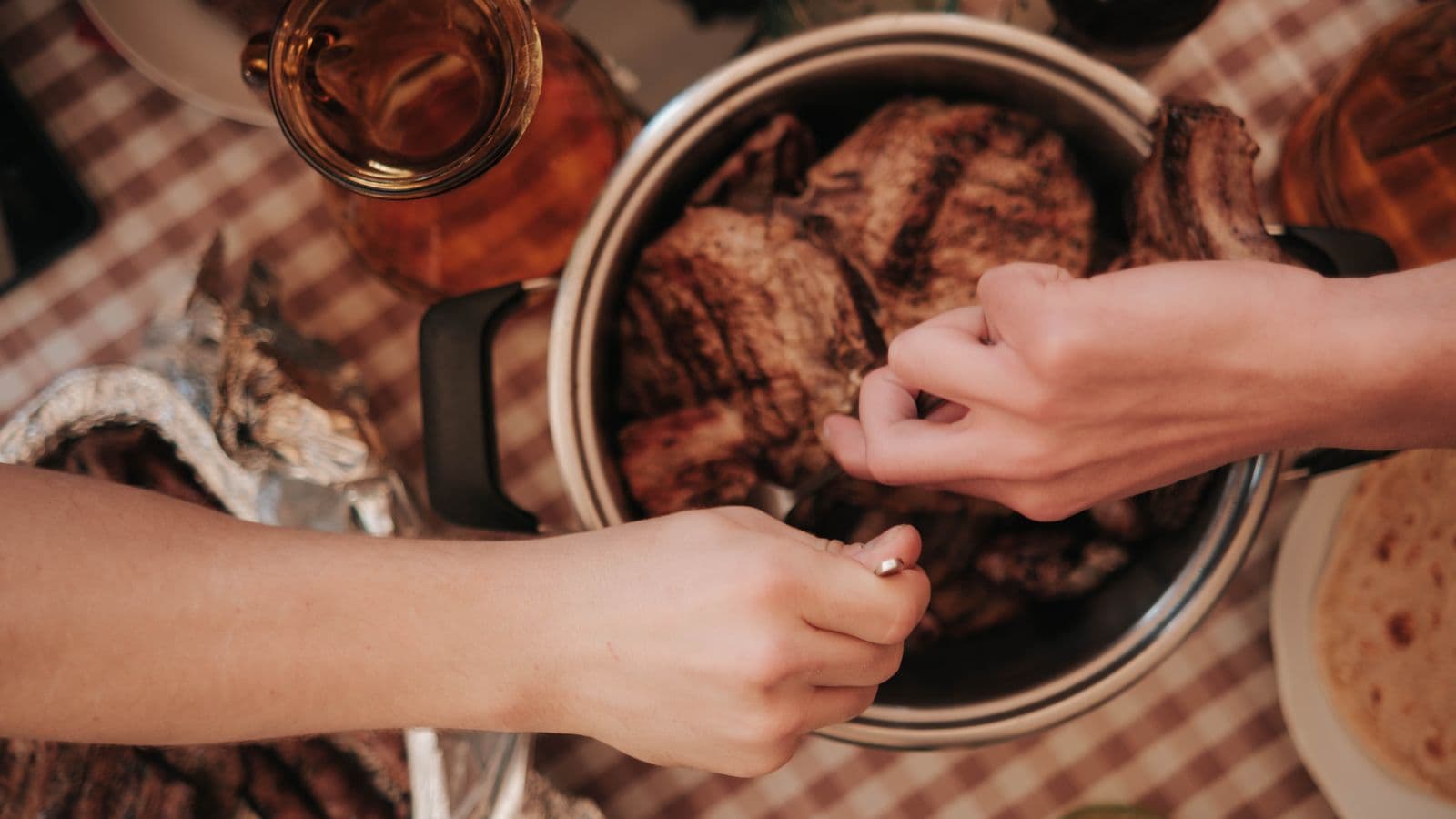
Photo: Kei Scampa · Pexels
You stand in front of the meat with a thermometer in hand and don’t know which number to stop at. You want a clear reference for chicken, pork, beef, fish and ground meat, and to know when the temperature means safe and when it means tasty.
The quick chart: internal temperature for cooking meat
The table below gives you the practical numbers. These are temperatures measured at the core (the thickest part), in degrees Celsius. For bone-in meat measure near the centre of the thickest part without touching the bone.
| Tipo di carne | Temperatura interna (°C) | Nota rapida |
|---|---|---|
| Pollo intero o a pezzi (compreso il ripieno) | 74°C | Nessuna scorciatoia: deve arrivare a 74°C al cuore |
| Tacchino (intero o pezzi) | 74°C | Come il pollo, soprattutto se farcito |
| Carne macinata (manzo, maiale, agnello) | 71°C | Più rischio di contaminazione: sempre ben cotta |
| Maiale (braciole, arrosti) | 63°C + riposo 3 min | Sicuro a 63°C se lasci riposare 3 minuti |
| Manzo/agnello/veal bistecche e arrosti | 52°C rare — 56°C medium-rare — 63°C medium — 71°C well done | Scegli in base al grado di cottura desiderato |
| Pesce (filetti, tranci) | 60°C o fino a carne opaca | Cuoce velocemente; controlla con un ago sottile |
| Salumi già cotto (riscaldare) | 60–65°C | Solo per riscaldare |
| Ripieni in pollame o carni ripiene | 74°C | Il ripieno raggiunge la temperatura del pollame |
Use this table as an immediate guide. "internal temperature for cooking meat" is the phrase to remember: measure at the core, avoid the bone, and count on resting when indicated.
Safety and preference: what each number means
Short rule: the minimum temperatures are for safety; the cooking preferences are for taste. Some meats (chicken and stuffings) must reach the safety temperature. For steaks and roasts you can choose lower temperatures: calculate the desired doneness and remember carryover (the temperature rise during resting).
Useful detail: carryover raises the meat by a few degrees while it rests, so you can remove steaks or roasts from the heat a few degrees below the final target. For bone-in cuts, move the probe away from the bone. For ground meat always apply the safety temperature, not the preference one.
Where to measure and how to use the kitchen thermometer (6-step procedure)
In short: insert the thermometer into the thickest part, avoid bones and fat, wait for the reading to stabilise, then repeat in several places.
- Clean the tip of the thermometer with hot water and soap.
- Insert the probe into the thickest part of the meat (for roasts: in the centre; for steaks: in the centre and angled towards the core).
- Avoid bones, cartilage or fat: they give false readings.
- Wait for the reading to stabilise; instant-read thermometers take a few seconds, for digital ones wait for confirmation.
- Check in at least two points if the piece is irregular or has thicker parts.
- After measuring, clean the probe again and, if needed, let the meat rest for the indicated time (e.g. 3 minutes for pork).
Always use the thermometer rather than relying on colour or texture. If you’re cooking several preparations at once, also read how to plan timings and timers: Kitchen timers: manage three preparations without mistakes.
Common mistakes and practical tips
Initial answer: measuring too early, touching the bone, using an uncalibrated thermometer or judging by colour are the most common mistakes. Learn to calibrate, choose the right spot and account for resting so you don’t end up with meat over- or undercooked.
Practical tips:
- Quick calibration: put the tip in a glass with ice and water; it should read close to 0°C.
- If the meat is thin, measure at the thickest point; for very thin fillets visual doneness can help.
- For large roasts consider the time it takes for internal heat: set the oven closer to the desired temperature and check earlier than you think.
- Don’t insert the probe and leave it in unless the thermometer is designed to stay in the oven.
If you’re changing ingredients or shortening cooking times for a recipe found online, check the substitutions and how they affect time and temperature: Ingredient substitutions for cooking: the practical list that works.
Quick questions
At what temperature should chicken be cooked?
Chicken must reach 74°C at the core, whether in pieces, whole or stuffed. Measure in the thickest part of the thigh or breast without touching the bone. Don’t rely on colour alone: the thermometer is the only reliable way for safety.
What is the internal cooking temperature for a rare steak?
For a rare steak aim for about 52°C at the core. Rare (52°C), medium-rare (56°C), medium (63°C) and well done (71°C). Remove the steak from the heat a few degrees before the target to allow for the rise during resting.
How do you calibrate a kitchen thermometer?
Put the tip in a glass filled with crushed ice and water, stir and wait 30 seconds: it should read 0°C. If the value is different, consult the thermometer’s manual for the correction or calibration procedure. Repeat periodically.
Does the temperature change after resting?
Yes: the meat continues to rise in temperature (carryover) by 2–5°C depending on mass and residual heat. For that reason you’ll remove the meat a few degrees before the final target and let it rest for the indicated time.
Conclusion: what to do tonight
Grab the thermometer, pick a piece of meat and try the table. Measure at the core, avoid the bone, and note the result: next time you’ll know exactly when to stop. If you have too many recipes saved and don’t know where to start, try cooking just one tonight and focus on temperature: Saved too many recipes? Cook just one tonight.
If you often turn recipe videos into concrete instructions, there are tools that read recipes and save them with quantities and timings; they can help when a video just says "cook until done". Happy cooking and trust the thermometer.