How much pasta per person: grams and practical rules
Quick guide to how many grams of pasta per person: standard portions, adjustments for sauces, fresh or filled pasta, measuring by eye and menu planning.
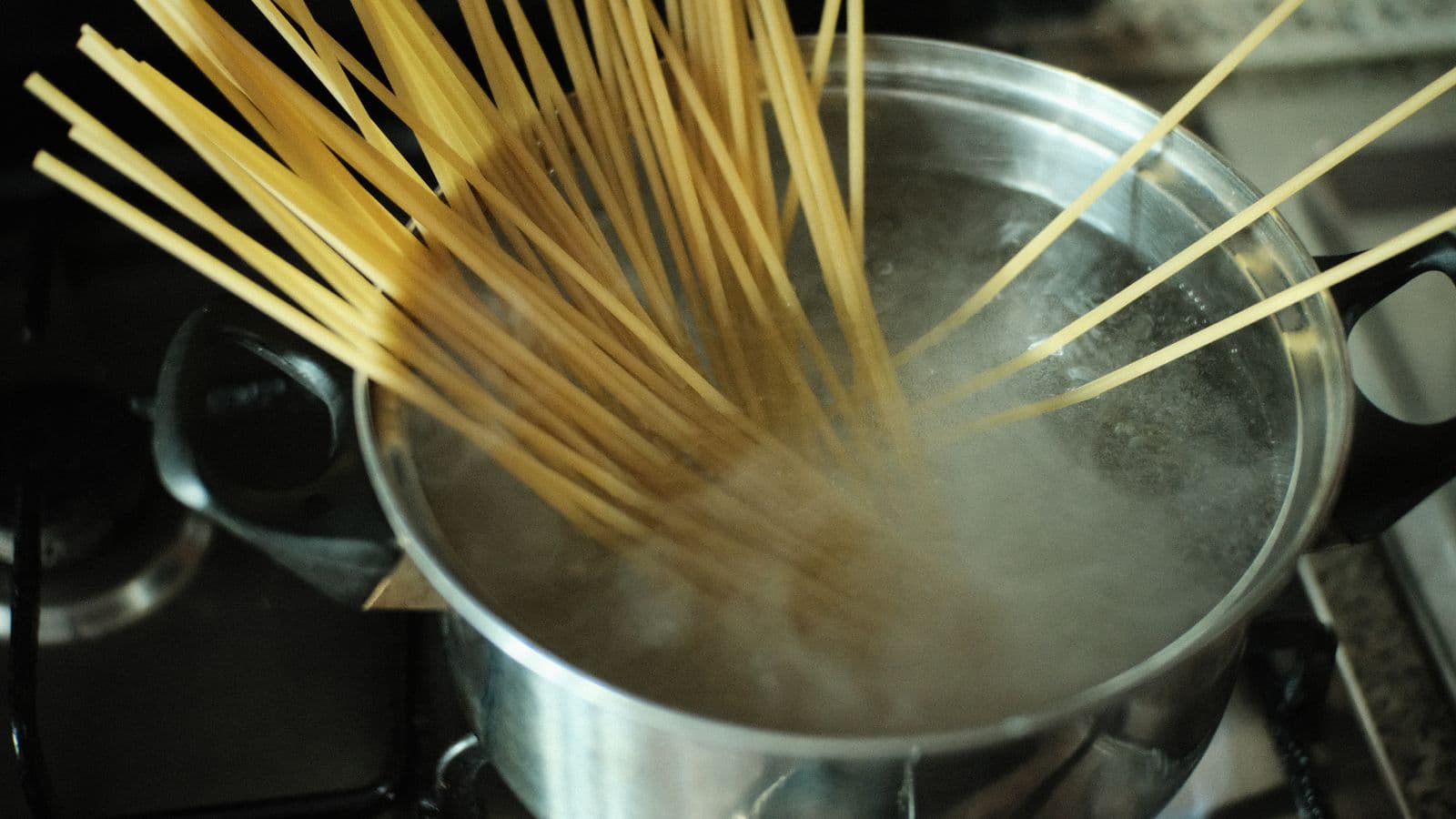
Photo: Gianpiero Ferraro · Pexels
You need a quick answer: how many grams of pasta per person? Make the main decision below and then find the adjustments.
Quick rule (the short answer)
- Dry pasta as a starter/main course (average portion): 80 g per person.
- Dry pasta for light eaters: 60–70 g per person.
- Dry pasta for big appetites or generous portions: 100–120 g per person.
- Fresh pasta: 100 g per person (average portion); 120–140 g for large appetites.
- Filled pasta (ravioli, fresh tortellini): 180–220 g per person.
These numbers are the best starting point in the kitchen. Use them as a reference and then read the steps below to adapt them to the situation.
How the sauce and the menu change the portion
The amount doesn’t depend only on the number of people. It also depends on what you serve with the pasta.
- If you serve a substantial main course (meat, baked fish), reduce the portion by 15–30% compared with the quick rule. An 80 g portion can become 60–70 g.
- If the pasta is the only course, keep it at 80 g or increase to 100 g for big appetites.
- Rich sauces (ragu, cream, strong cheeses) fill you up faster: you can stick to 70–90 g.
- Light dressings (oil, lemon, vegetables) are less filling: stay around 80–100 g.
- If you prepare generous starters or many nibbles, consider a smaller portion.
Practical example: for 4 people, with a meat main course and salad, calculate 4×70 g = 280 g of dry pasta in total.
Practical method: how to measure without a scale (3 simple techniques)
Use one of these techniques if you don’t have a scale to hand.
- Measure by hand (for long dry pasta): make a closed fist. A medium portion of spaghetti (about 80 g) fits between the thumb and index finger forming a circle roughly 2–2.5 cm in diameter. If you fill a larger circle, it’s closer to 100–120 g.
- Measure with the hole in a ladle or the hole in a spaghetti measure: many ladles have a hole that corresponds to one portion. If you’re not sure, do a test: weigh the portion that fits the hole and note the result.
- Measure by cup (only for short pasta): one cup (250 ml) of short pasta weighs approximately 100–120 g. So for 80 g use two-thirds of a cup.
Tip: try it at home. Measure using one of these methods and then weigh it with a scale to see how it matches. After a few tries you’ll be able to estimate by eye.
Cooking for multiple courses or for guests: how to plan quantities
When you organise a multi-course meal or have guests who want different options, follow these practical steps:
- Decide whether the pasta is the main dish or one of several dishes.
- For multi-course menus with starter and main, use reduced portions (60–70 g dry).
- For buffets or small-portion service, consider 50–60 g if you want more variety.
- Always calculate a small extra: allow 5–10% more for safety or always round up by 10–20 g per person.
If you’re combining ingredients and making the shopping list for several recipes, it’s useful to collect everything together so you don’t buy duplicates. You can read how to combine ingredients from three recipes and make the shopping list here: Combine ingredients from three recipes and make the shopping list.
Cooking several preparations at once without getting portions wrong
If you have multiple pots or preparations in parallel, set the timings before you start. Two practical tips:
- Calculate the pasta cooking time and sync it with the rest of the dish. To learn how to handle three preparations together, read these simple tricks: Timer in the kitchen: manage three preparations without mistakes.
- If you serve different types of pasta (e.g. one with ragu and one light), label pots and quantities to avoid confusion.
Quick procedure to coordinate everything:
- Prepare the sauces before you put the water on to boil.
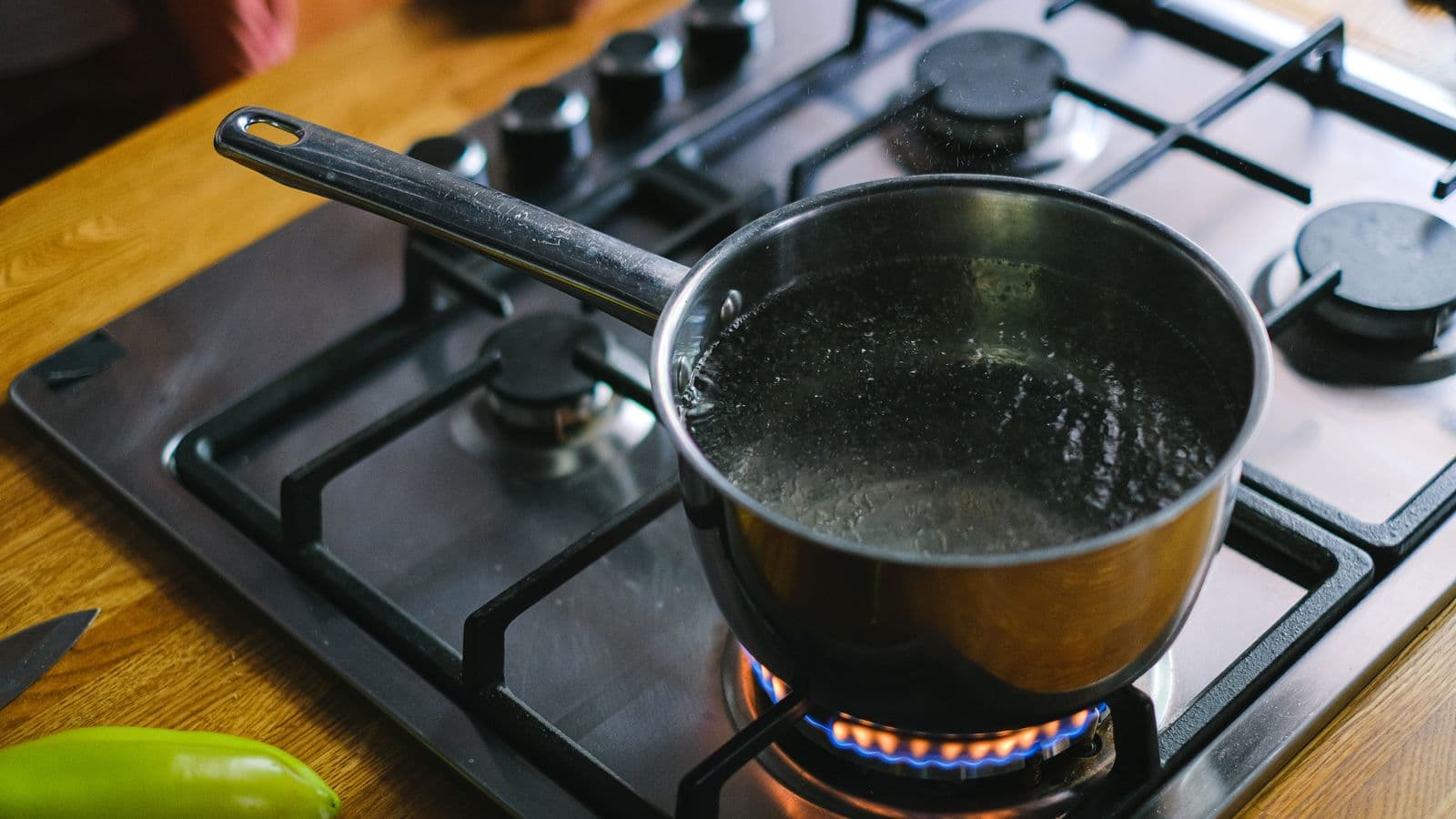
- Put the water on to boil with salt when the sauces are almost ready.
- Quickly measure the pasta with one of the explained techniques and cook it at the right time so you can combine it with the sauce.
- Always taste: flavour and texture will tell you if you reduced or increased the portion too much.
Final tips and what to do now
- For an easy dinner, use 80 g of dry pasta per person as a base. Adjust for appetites and the menu.
- Do a measuring test at home to learn to judge by eye.
- If you save recipes from social media or videos to remake later, keep portions and ingredients together: it can simplify shopping and planning. If you often use recipes found in videos or on Instagram, try these tips on how to save them and actually find them again: Save recipes from Instagram and actually find them again.
If you want the conversion of quantities to be immediate when you save a video or a link, Cucinario can turn the content into structured ingredients and portions in seconds — useful if you have many saved recipes and want the grams ready.
Do one simple thing now: choose the base portion (80 g) and adapt it straight away to the menu. If you need to, measure one portion and weigh it with a scale: after two or three tries you’ll measure without thinking.