Cups to grams: conversion depends on the ingredient
Practical guide and quick table to convert cups into grams for common ingredients (1 cup ≈ 240 ml). Includes simple rules and a step-by-step method.
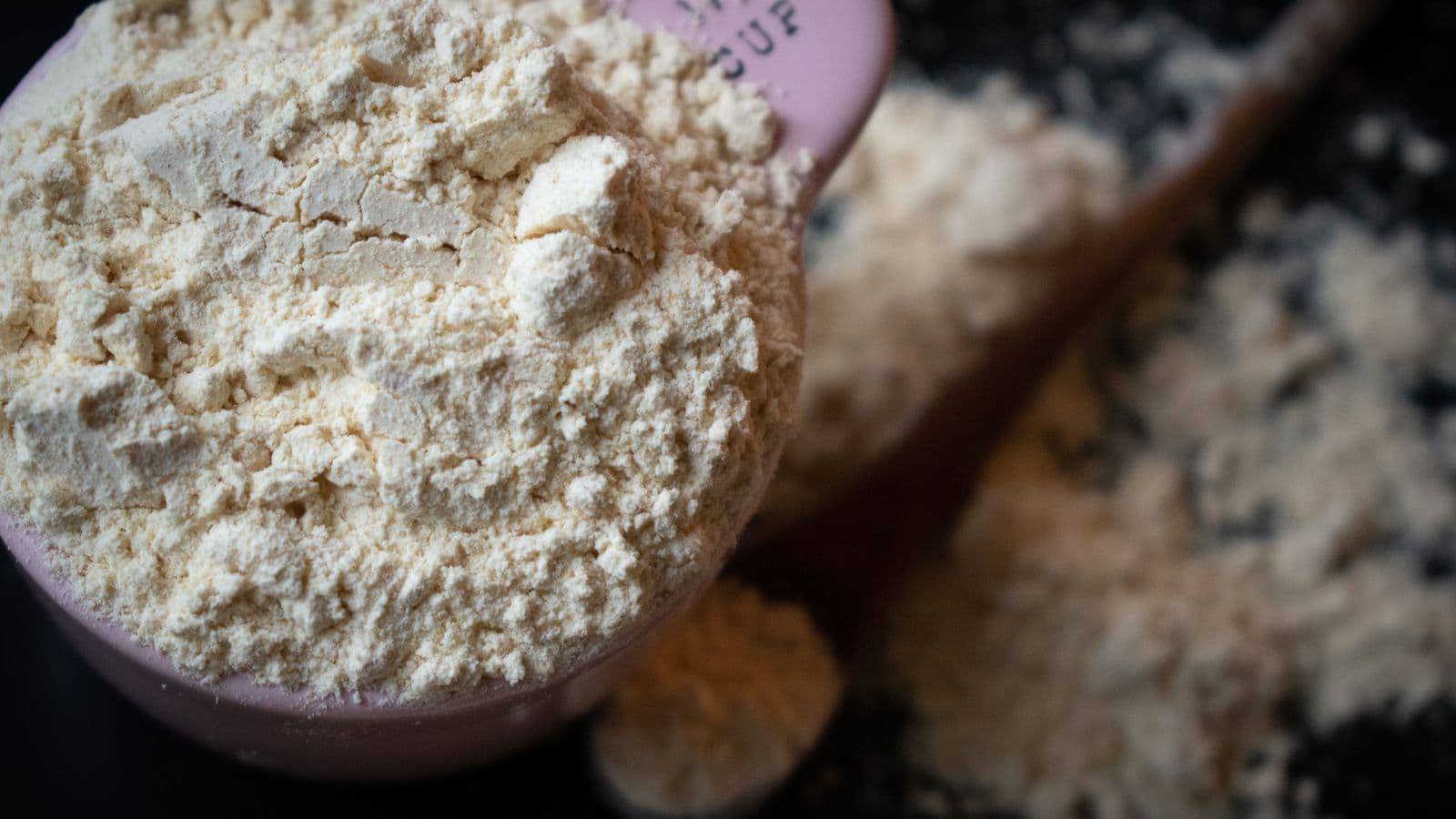
Photo: Maria Petersson · Pexels
You have an American recipe and want to know how much a cup weighs. Immediate answer: a cup is a measure of volume, not weight. In practical cooking we use 1 cup ≈ 240 ml (the US "legal" cup is 236.588 ml). Grams change depending on the ingredient.
Below you’ll find a table with practical conversions for the most common ingredients (1 cup = 240 ml). Use these numbers when you want to turn a recipe into weighed amounts.
Quick table: 1 cup in grams (approximate values)
| Ingredient | 1 cup (240 ml) ≈ grams |
|---|---|
| Water / stock | 240 g |
| Milk | 240 g |
| Vegetable oil | 218 g |
| Honey | 340 g |
| Granulated sugar | 200 g |
| Brown sugar (packed) | 220 g |
| Icing sugar (sifted) | 120 g |
| 00 flour / all-purpose (spoon & level) | 120 g |
| Whole wheat flour | 130 g |
| Butter (soft/solid) | 227 g |
| Cocoa powder (sifted) | 85 g |
| Rolled oats | 90 g |
| Raw rice (long grain) | 185 g |
| Cornmeal / polenta | 160 g |
| Chopped nuts | 120 g |
| Chocolate chips | 170 g |
| Yogurt / sour cream | 245 g |
Note: these numbers are practical conventions used in baking and cooking. Small variations (±5–10%) can depend on compaction, humidity and how the cup is filled.
Simple rules to remember
- A cup measures volume (ml), not mass (g). For liquids the conversion is practically 1:1 (1 ml ≈ 1 g for water and similar liquids).
- Sugars and flours do not weigh the same: granulated sugar ≈ 200 g, flour ≈ 120 g.
- Dense ingredients like honey and syrups weigh much more (honey ≈ 340 g).
- Light, airy solids (cocoa, oats) have much lower density and therefore fewer grams per cup.
So: when a recipe says "1 cup" check this table straight away or weigh the ingredient.
How to convert any cup to grams: practical procedure
- Identify the exact ingredient (flour, sugar, butter, oil, etc.).
- Look up the item in the table above. If it’s listed, use that value.
- If it’s not listed, apply the quick rule:
- Liquids (water, milk, stock): 240 g
- Oils and liquid fats: ~220 g
- Sugars: ~200–220 g
- Light flours: ~110–130 g
- Dense ingredients (honey, syrups): ~300–340 g
- For precision (if you know the density in g/ml): grams = volume (ml) × density (g/ml). Use 240 ml for 1 cup.
- When possible, weigh: put the empty container on the scales, zero them and fill the cup; the value on the scales is the actual weight.
Quick example: you want to convert 3/4 cup of granulated sugar. 1 cup ≈ 200 g → 0.75 × 200 = 150 g.
Small details that make a difference in baking
- Flour: the method matters. If you push the cup straight into the bag and compact it, you’ll get more flour. The "spoon & level" method (spoon into the flour then level with the back of a knife) gives about 120 g. If you sift the flour first, the weight goes down.
- Brown sugar: it’s often meant packed into the cup. The difference can be 10–30 g.
- Icing sugar: the weight changes a lot depending on whether it’s sifted. If the recipe specifies "sifted" use the lower value.
- Chopped ingredients (nuts, dried fruit) vary a lot depending on how finely they’re chopped.
When you make delicate baked goods, always weigh. If you don’t have scales and the recipe only shows cups, follow the indicated method (spoon & level, packed, sifted) to reduce errors.
Quick conversion for common cases (mini quick-reference)
- 00 flour: 1 cup = 120 g
- Granulated sugar: 1 cup = 200 g
- Butter: 1 cup = 227 g
- Honey: 1 cup = 340 g
- Oil: 1 cup = 218 g
Use these five as a practical rule when you need to convert quickly.
If you need to scale or combine recipes
When you multiply or divide a recipe, convert it to grams first. It’s the most accurate way to keep proportions. If you need to combine ingredients from multiple recipes and make the shopping list, add up the grams of each ingredient: it’s more reliable than adding cups.
If you want to learn more about recalculating quantities and applying the numbers practically, read our guide on how How to recalculate recipe quantities: rules and practical numbers.
If the recipe comes from Instagram or TikTok and you have the link, it’s handy to save the video and the quantities in one place: see how to Save recipes from Instagram and actually find them so you don’t have to convert everything each time.
When you combine ingredients from several recipes to make the weekly shopping list, you need to add the grams and group them by category: here we explain how to Combine ingredients from three recipes and make the shopping list.
Final practical tips
- If precision matters (cakes, fermented doughs), buy digital kitchen scales. They’re inexpensive and solve the problem.
- Learn the five quick references (flour 120 g, sugar 200 g, butter 227 g, honey 340 g, oil 218 g) and you’ll use them often.
- When the recipe indicates "cup packed" or "sifted", follow the exact method or look up specific conversions.
If you prefer to avoid all these manual conversions, you can also import the link to the video or recipe page: there are tools that turn recipe videos into ingredients and amounts already converted; if you want to know more about taking a web recipe to a weighed format, see the alternative procedure we suggest.
Try this right away: take the first recipe in cups you’ve saved, weigh its flour (1 cup = 120 g) and bake. You’ll notice the result improves already on the first attempt.